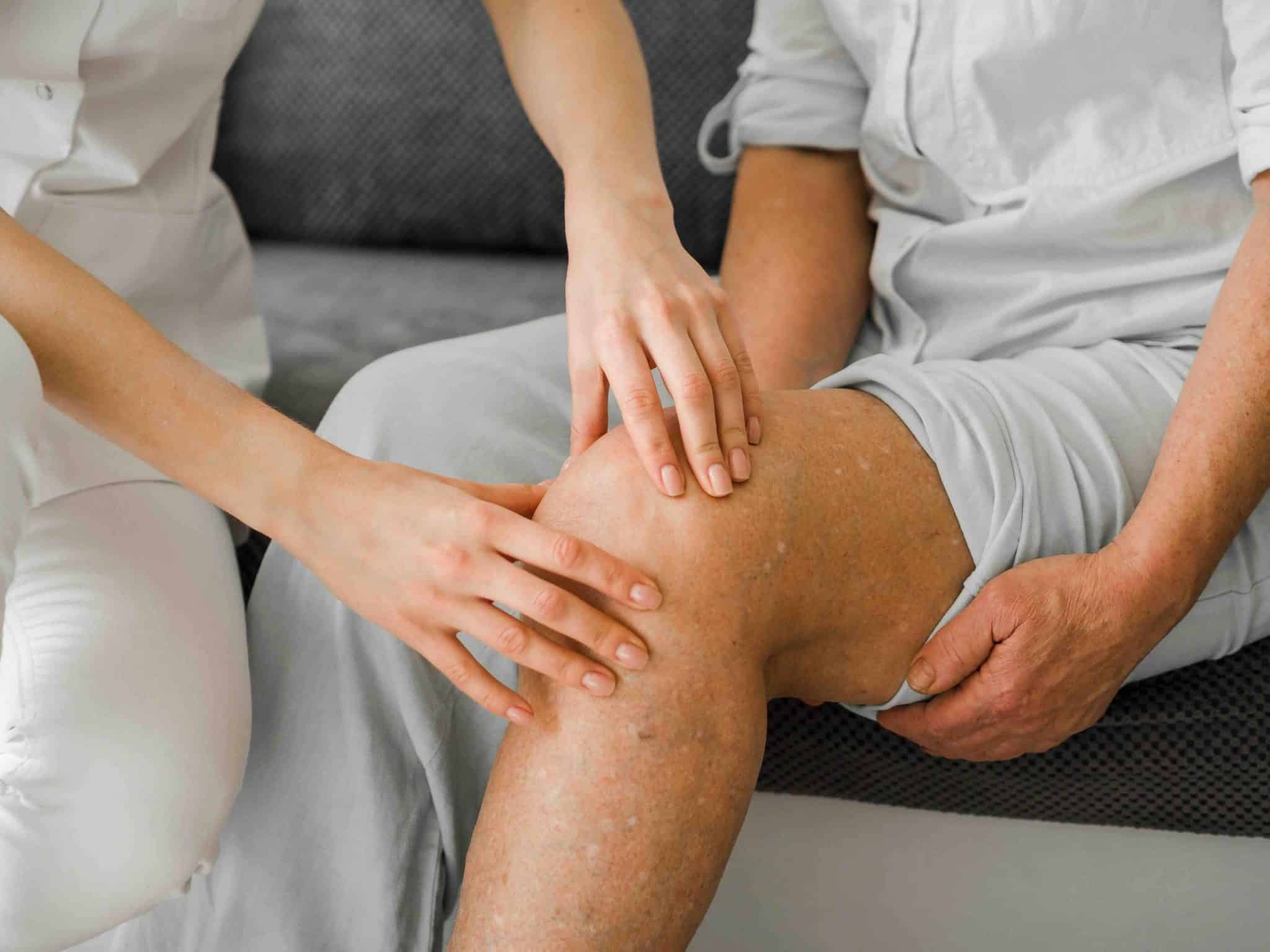
Deciding to undergo total knee replacement—known medically as total knee arthroplasty (TKA)—is a major step toward reclaiming a pain-free, active life. For many, years of severe osteoarthritis, traumatic joint damage, or cartilage loss reduce daily living to a series of physical compromises. Standing up from a chair, navigating stairs, or walking through a grocery store becomes exhausting.
While the surgery itself removes damaged bone and worn cartilage, replacing them with durable metal and high-density polyethylene components, the true transformation happens during the months that follow. Reviewing a complete knee replacement guide empowers you to navigate your recovery with confidence, set clear expectations, and achieve optimal physical outcomes—from immediate post-operative milestones to long-term joint care.
Phase 1: The First 72 Hours Post-Surgery
The initial days following knee replacement set the foundation for your long-term mobility. Modern surgical techniques, improved regional anesthesia, and rapid-rehabilitation protocols mean that most patients begin moving within hours of leaving the operating suite.
- Immediate Mobilization: Under the guidance of a physical therapist, you will typically stand and take your first steps using a walker or crutches on the day of surgery or early the next morning. Early weight-bearing stimulates localized blood flow, reduces the risk of deep vein thrombosis (DVT), and encourages your nervous system to adapt to the new joint.
- Pain Management Protocols: Modern post-operative care utilizes multi-modal pain management. Rather than relying solely on heavy opioids, clinicians combine nerve blocks, non-steroidal anti-inflammatory drugs (NSAIDs), targeted ice therapy, and mild analgesics. This minimizes side effects like nausea or severe fatigue while keeping discomfort manageable enough for active movement.
- Managing Swelling and Effusion: Localized swelling is a normal physiological response to surgery. Keeping the leg elevated above heart level when resting and applying cold therapy for 20-minute intervals helps control inflammation around the incision site.
Phase 2: Weeks 1 to 6 — Early Rehabilitation & Functional Recovery
The first six weeks focus on surgical wound healing, pain control, restoring passive range of motion, and regaining basic functional independence.
Restoring Joint Extension and Flexion
Range of motion (ROM) is the primary benchmark during early physical therapy. Your therapy team will focus heavily on two specific movement metrics:
- Full Terminal Extension ($0^\circ$): Achieving a completely straight leg is the highest priority. A residual bend in the knee creates an unstable gait, leads to early quadriceps fatigue, and causes lower back strain.
- Progressive Flexion ($90^\circ\text{ to }110^\circ+$): By Week 2, reaching a $90^\circ$ bend is typical, allowing you to sit comfortably in a chair. By Weeks 4 to 6, reaching $110^\circ$ to $120^\circ$ enables smooth stair climbing, riding a stationary bike, and getting in and out of automobiles easily.
Wound Care and Incision Healing
Keeping your surgical incision clean and dry is critical to prevent joint infection. Absorbable sutures, skin staples, or medical mesh tapes are commonly used. Avoid submerging the knee in baths, hot tubs, or swimming pools until your surgeon clears the incision—usually around Weeks 3 to 4 once the skin is completely sealed with zero drainage.
| Recovery Phase | Primary Objective | Typical Mobility Status | Key Exercise Focus |
| Weeks 1–2 | Pain control, incision care, $0^\circ\text{–}90^\circ$ ROM | Walker / Crutches | Ankle pumps, quad sets, straight-leg raises |
| Weeks 3–4 | Gait normalization, swelling reduction | Single cane / Unassisted indoors | Stationary bike, heel slides, mini-squats |
| Weeks 5–6 | Full weight-bearing, ascending/descending stairs | Unassisted walking | Step-ups, seated leg presses, balance holds |
Phase 3: Weeks 7 to 12 — Rebuilding Muscle Mass and Strength
By the second month, sharp surgical pain gives way to dull, muscular aching associated with physical conditioning. The focus shifts from basic joint mobility to active muscle hypertrophy, core stability, and functional endurance.
Re-Activating the Quadriceps and Glutes
During surgery, trauma to surrounding soft tissue causes temporary neural inhibition—a condition where the brain struggles to fire the vastus medialis obliquus (VMO) and main quadriceps heads. Re-establishing this neural connection is essential for long-term stability.
- Closed-Kinetic-Chain Loading: Exercises where the foot remains firmly planted on a surface—such as box squats, leg presses, and step-downs—distribute compressive forces evenly across the prosthetic components without creating harmful shearing forces.
- Posterior Chain Integration: Strengthening the hamstrings, gluteus medius, and calves balances the forces acting on the knee joint, improving dynamic balance and preventing the knee from buckling inward during movement.
- Proprioception & Balance: Artificial joint implants replace native joint receptors. Incorporating single-leg stance drills, tandem walking, and unstable surface balancing re-trains your nervous system to adjust automatically to uneven terrain.
Phase 4: Long-Term Outlook — Months 3 to 12 and Beyond
Between Months 3 and 12, your new knee transforms from a surgically repaired joint into a natural, integrated part of your body. Most patients achieve full recovery milestones, near-zero baseline pain, and complete physical independence during this window.
What Does “Normal” Feel Like?
It is common to experience mild clicking or a metallic ticking sound when bending or straightening the leg. This is simply the mechanical interface between the polished metal alloy and the ultra-high-molecular-weight polyethylene spacer, and it is entirely harmless. Additionally, a small patch of numbness on the outer side of the incision is normal due to superficial skin nerves cut during surgery, which gradually shrinks over time.
Navigating Daily Living and Returning to Sport
Modern joint prostheses are engineered to handle millions of movement cycles over 20 to 30 years. To protect your investment and ensure maximum longevity, align your physical activities with low-impact, high-return choices:
Highly Recommended Activities:
- Low-Impact Cardiovascular Fitness: Road cycling, stationary bikes, swimming, water aerobics, and elliptical training offer exceptional heart-health benefits with zero joint impact.
- Recreational Sports: Golf, doubles tennis, pickleball, kayaking, hiking with trekking poles, and power walking allow you to stay competitive and engaged without excessive joint wear.
- Strength Training: Gym-based machine training, light dumbbell work, bodyweight squats, and resistance band routines maintain bone density and support joint longevity.
Activities to Avoid or Modify:
- High-Impact Running & Pounding: Continuous long-distance running on pavement accelerates polyethylene insert wear and risks premature mechanical loosening.
- Contact or Collision Sports: Basketball, soccer, football, and martial arts carry high risks of dynamic twisting, sudden lateral impacts, and traumatic prosthetic damage.
- Repetitive Deep Kneeling: While modern implants permit deep bending, kneeling directly on hard surfaces can be uncomfortable; using padded foam mats or cushions makes household chores or gardening far more comfortable.
Preventing Complications & Long-Term Joint Maintenance
Sustaining optimal joint health over decades requires ongoing awareness and preventive habits.
- Weight Management and Joint Force Reduction: Every single pound of body weight translates to roughly three to four pounds of dynamic force across the knee joint when walking. Maintaining a healthy body weight significantly reduces mechanical wear on the polyethylene liner.
- Dental and Medical Clearance (Infection Control): Bacteria entering the bloodstream during invasive dental procedures or minor surgeries can theoretically colonize the metal components of an artificial joint. Consult your orthopedic surgeon regarding short-term prophylactic antibiotic protocols prior to major dental work.
- Routine Orthopedic Follow-Ups: Periodic X-rays (typically at 1 year, 5 years, and every 5 years thereafter) allow your orthopedic team to monitor implant alignment, check bone density around the prosthesis, and verify component stability before minor issues escalate.
The Psychological Shift: Reclaiming Your Independence
Perhaps the most significant aspect of life after knee replacement is the mental freedom that comes with restored mobility. Chronic joint pain slowly restricts life, causing people to turn down trips, skip family events, or abandon lifelong hobbies.
As physical capacity returns, setting progressive, meaningful personal goals—such as taking a walking vacation, playing a round of golf without a cart, or playing on the floor with grandchildren—provides purpose throughout rehabilitation. By pairing expert surgical care with consistent, disciplined rehabilitation, total knee replacement does not just fix a joint—it restores your quality of life.