
Zeprit.com Review: A Look at Legitimacy Through Its Security Layers
Parting with your money for a platform you don’t know well carries an inherent risk. That concern drives most of the research people do before signing up anywhere.
The real question is whether you can trust the site with real funds. That matters more than any amount of polish on the homepage. A dashboard can look sharp but still fall short where it counts.
This Zeprit.com review will not be swayed by appearances alone. Zeprit presents itself as the link between the average trader and the sort of infrastructure usually reserved for large institutions. That’s a bold claim.
This review checks how much of that claim holds up, using details the platform shares on its own site. Where other reviews stop at surface features, this one looks at the structural choices sitting underneath. Legitimacy tends to show itself there, before any flashier elements are added on top.

Why Does This Review Put Security First?
When comparing platforms, it’s tempting to look at charts or account perks first. This Zeprit.com review takes a different path, because a trader’s first concern should be whether their capital sits in safe hands.
If the security side is questionable, a nice-looking interface does not help much. A trader can have every tool imaginable at their fingertips and still lose confidence fast if the basics feel shaky. That is why safety comes first here, rather than tucked into the fine print near the footer.
The word protection shows up often across the platform’s pages. On its own, that proves nothing. But it does show where the company’s attention sits, and that is worth checking further before moving on to anything else.
There is a real difference between a platform that makes broad statements and one willing to name the specific measures it has in place. Naming specifics takes more effort than repeating a generic promise. That effort tends to signal how seriously a company takes the subject.
What Actually Backs Up the Platform’s Safety Claims?
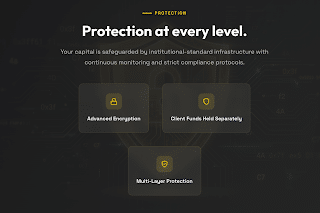
Vague talk of safety is easy to find online. Zeprit, though, names three specific things it does for client capital, and that level of detail is worth noting.
A few more insights in this Zeprit.com review come from unpacking what those three pillars mean in practice. The site names encryption, layered protection, and separate client funds as its core measures. Each one is meant to cover a different kind of risk a trader might run into.
Here is a short breakdown of what each one covers for a trader.
- Encryption guards data as it travels between a trader’s device and the platform’s systems.
- Separate client funds means trading capital isn’t mixed with the money the company uses to run its own operations.
- Layered protection stacks several checks, so a single weak point doesn’t compromise the whole system.
None of these read as flashy on paper. They are the kind of structural decisions that tend to matter more than anything shiny sitting on the surface. A platform chasing appearances usually skips this level of detail entirely.
Why Does Fund Separation Matter So Much?
One of the more telling details in this Zeprit.com review is how it handles funds. On the surface, keeping client and company money apart sounds straightforward.
But it is a deliberate choice, not an afterthought. Some platforms treat everything as one shared pool, while managing two separate pools takes extra systems and extra work. Choosing to do that says something about how the platform views its responsibility to traders.
This kind of separation also limits how much one side of the business can affect the other. If company operations run into trouble, client funds sitting apart are less likely to be caught up in it. That distinction matters more than it might seem at first glance.

What Does Layered Protection Really Mean Here?
This Zeprit.com review also finds that layered protection is more than a slogan sitting on a page. The platform describes ongoing monitoring working alongside encryption and fund separation, not replacing either one.
Each layer catches what the others might miss. This mirrors how a bank handles security in the physical world. No single lock guards an entire vault, and the same logic applies here in a digital setting.
A lone security measure could be worked around without anyone noticing right away. Different checks working together cut down that risk considerably, so a weakness in one spot does not put the whole account at risk. That kind of redundancy is common in systems built to last.
Do Uptime and Monitoring Build Real Trust?
If encryption and fund separation are the building’s structure, ongoing monitoring ties the whole picture together. It is the part watching the front door day and night, rather than checking on it occasionally.
This Zeprit.com review also picks up on something less obvious. The platform makes a case for stability just as much as it does for blocking outside threats, mentioning backup systems and infrastructure built for steady access.
For someone checking their account every day, that steadiness carries real weight. A platform that works reliably tends to earn quiet trust over time, even without anyone talking about it directly. Here is why that connection matters in practice.
- Uptime shapes trust more than people expect. A platform going offline during a busy market session breeds doubt, even when the funds themselves stay secure.
- Backup systems remove single points of failure from the network. If one part runs into trouble, another can step in without the trader noticing.
- Steady access builds confidence over time, since regular users trust a platform more when it is reliably there.
This Zeprit.com review makes it clear that legitimacy isn’t built on a single feature. It comes from smaller decisions stacking together, much like the layered setup already discussed above.
How Does This Measure Up Against What Traders Look For?
A trader researching a new platform tends to want the same kind of signals every time. They look for evidence of structure, not something written up by a marketing team trying to sound reassuring.
This Zeprit.com review found that evidence lives in the details, not in broad claims. An experienced trader knows specifics carry more weight than adjectives ever will. When a platform names its actual protections, it gives traders something concrete to check for themselves.
That habit of checking specifics is worth carrying into any research on any platform. Broad promises are cheap to make and hard to verify. Details that can actually be traced back to something real tend to hold up better under scrutiny.
What Does This Mean for Someone Weighing the Platform?
This is not here to make the decision for anyone. It lays out what actually sits behind the platform’s claims.
The separate funds, the encryption, and the steady infrastructure aren’t just lines on a page. The language used across the site leans toward structure rather than promises about returns, which lines up with how the platform presents itself elsewhere.
A prospective user can see protection described in terms that can actually be checked. Not everyone finds it easy to read between the lines of a homepage, but separating the structural details from the general reassurance is worth the effort.
Fund separation and layered security are worth checking on any platform, not only this one. Building that habit tends to pay off well beyond a single review or a single decision.
Final Thoughts
This Zeprit.com review set out to see what underpins the platform’s talk of safety and structure. Separate client funds, encryption, and steady infrastructure for access stand out as the concrete details worth remembering.
None of these guarantee anything about the future. But together, they suggest an operation built with thought rather than pieced together in a hurry.
The point, in the end, is fairly straightforward. Anyone looking into a trading platform should go past the headlines and examine the mechanics underneath. Based on what the platform shares about its own systems, there is enough substance here for someone to do exactly that on their own.