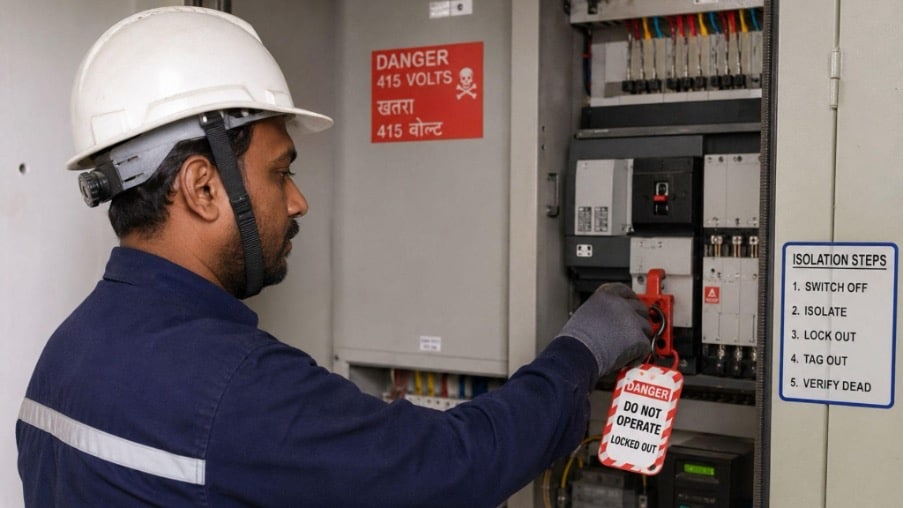
How Do RCCBs Detect And Respond To Electrical Leakage?
Electrical installations need suitable protective measures to identify faults and help reduce potential safety risks. Certain devices are designed to monitor electrical conditions and respond when an abnormal situation occurs. Understanding how these protective mechanisms work can help users make informed decisions about electrical installations and maintenance.
RCCB operation and leakage detection
An RCCB stands for Residual Current Circuit Breaker. It monitors the current flowing through an electrical circuit and detects an imbalance between the current entering and returning from the circuit.
Normally, the current going in and out of the circuit stays balanced. If some current escapes to the ground, this balance is lost. The RCCB notices this change and, once the difference reaches a certain level, it shuts off the circuit. This quick action helps reduce the time that electrical leakage can occur and lowers the risk from leftover current.
Common causes of electrical leakage
Electrical leakage often happens when insulation or electrical parts are damaged. Some common reasons are:
- Deteriorated or damaged insulation
- Moisture entering electrical equipment
- Faulty appliances or components
- Damaged or exposed wiring
- Accidental contact with conductive parts
- Incorrect installation or inadequate maintenance
Environmental conditions can also affect electrical installations. Heat, moisture, dust and mechanical stress may gradually affect insulation and other components, making appropriate protection and regular inspection important.
RCCBs and electrical protection
The primary purpose of an RCCB is to detect residual current and interrupt the circuit when the specified operating condition is reached. This can be useful across residential, commercial and industrial installations.
RCCBs may be particularly relevant in areas where electrical equipment is exposed to moisture or where people may come into contact with conductive surfaces. However, they form only one part of an overall electrical protection arrangement.
Proper earthing, suitable protective devices, correct installation and regular maintenance are also important considerations. Each element should be selected according to the requirements of the electrical system.
RCCBs within switchgear arrangements
Switchgear consists of equipment used to control, protect and isolate electrical circuits and equipment. An installation may include several switching and protective devices, with each serving a particular function.
An RCCB can be incorporated into a suitable switchgear arrangement to provide protection against residual current. Its specific function is to respond to current imbalance caused by leakage. Other protective devices may address different types of electrical faults, so the overall arrangement needs to be planned according to the installation’s requirements.
Key installation considerations
The appropriate RCCB specification depends on the characteristics of the electrical installation. Factors that may need consideration include:
- Rated current
- Residual operating current
- Number of poles
- Installation environment
- Applicable electrical standards
- Compatibility with other protective equipment
Installation should follow relevant standards and manufacturer instructions. Periodic testing can also help confirm that the protective mechanism operates as intended.
Conclusion
Effective electrical protection relies on suitable equipment, correct installation and regular maintenance. Understanding how leakage occurs and how protective devices respond to abnormal electrical conditions can help support safer and more dependable installations. Appropriate selection and professional installation are important for ensuring that the protection arrangement meets the requirements of its intended application.