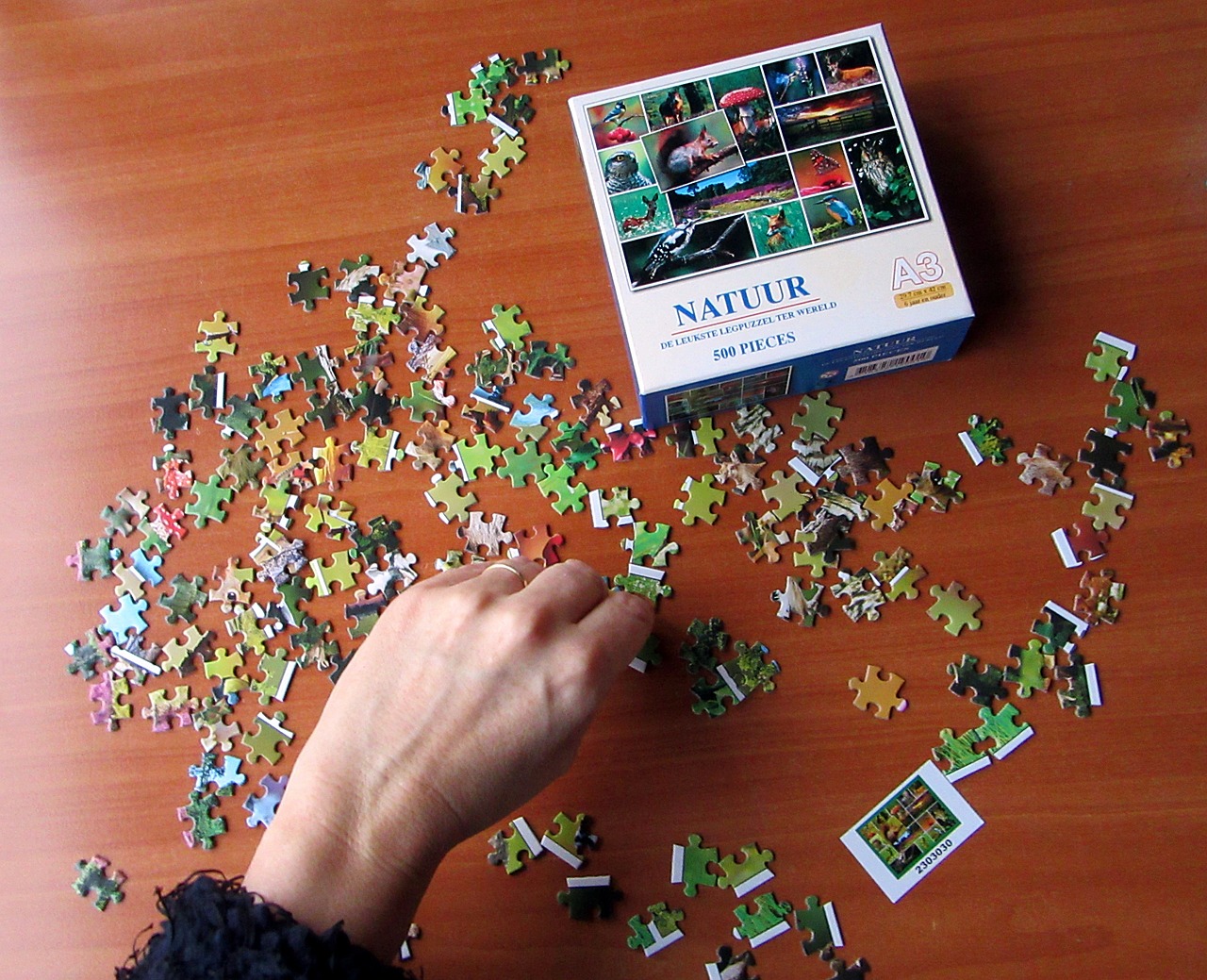
There is something quietly poetic about sitting before a half-finished jigsaw puzzle. The chaos of a thousand scattered pieces seems, at first glance, overwhelming. Yet, as each fragment begins to fit, a pattern emerges — clarity born from patience. For me, a lifestyle editor and communications leader who has spent decades shaping narratives, the act of puzzling has always been more than play. It is a reflection of how creativity, strategy, and life itself unfold: one thoughtful connection at a time.
The Puzzle as a Mirror for the Creative Mind
In editorial work, every campaign, headline, or story begins like a pile of unorganised pieces. There is a vision waiting to be revealed — an image of impact and emotion — but it takes discernment to see how each part contributes to the whole. That same discipline lives inside a puzzle. When I spread the pieces across the table, the familiar rhythm of sorting edges and colours becomes an unspoken lesson in structure, patience, and intuition.
Unlike the quick, fragmented gratification of social feeds, puzzles demand deep attention. They remind you to pause, observe, and connect. The process is less about completing the picture and more about enjoying the creative unfolding — a lesson that echoes the heart of storytelling and communication. In both, the magic lies in finding harmony between logic and imagination.
Why Puzzles Appeal to the Creative Professional
Many creative professionals thrive on the interplay between structure and spontaneity. Jigsaw puzzles offer a tangible form of that dance. Each piece represents a decision, a hypothesis, a micro-experiment in composition. Some fits come easily; others demand quiet persistence. It mirrors the creative process — where drafts evolve, ideas collide, and clarity emerges through revision.
I often compares it to editorial planning. Laying the border pieces feels like setting the tone or narrative arc. Sorting colours resembles curating imagery and emotion. And finally, completing sections one by one reflects the discipline of balancing detail with the bigger picture. The table becomes a creative studio — calm, ordered, and contemplative — where thinking slows just enough for clarity to surface.
From Tangible Puzzles to Digital Calm
Modern life rarely allows long hours of quiet reflection. Deadlines, notifications, and constant information flow leave little space for stillness. Yet even in this digital age, puzzles have found a new home online. Interactive jigsaw puzzles offer the same soothing rhythm of discovery — accessible from any screen, without losing the tactile satisfaction of progress.
These digital puzzles have become a form of active meditation during late evenings or between long writing sessions. The soft click of a completed section, the subtle hum of background music, and the satisfaction of forming patterns on-screen all help restore creative balance. Unlike other games that overstimulate, puzzles cultivate calm focus — they are small sanctuaries within the noise of modern work.
The Science of Slowing Down
Psychologists have long recognised the cognitive benefits of puzzles. They sharpen visual reasoning, improve concentration, and strengthen problem-solving abilities. Yet, beyond science, there is something profoundly human about piecing together order from disorder. It is a metaphor for how creative leaders often navigate ambiguity — translating fragments of information into coherent narratives, whether in marketing, storytelling, or life decisions.
Each small success — finding a piece that fits — releases dopamine, the brain’s chemical of reward. That gentle surge reinforces persistence, focus, and optimism. Over time, puzzles train the mind to associate progress with patience, not haste — an increasingly rare skill in today’s pace of productivity. This habit subtly translates into creative discipline: the courage to pause, to reconsider, to approach challenges from another angle until the picture feels right.
Lessons from the Puzzle Table
The first lesson is humility. No matter how experienced you are, every new puzzle begins at zero. You cannot rush it, and you cannot force connections that do not belong. Creativity works the same way. Every new campaign, article, or brand narrative demands fresh observation, empathy, and curiosity. The moment you assume you already know the outcome, you stop seeing the pieces for what they are.
The second lesson is perspective. Sometimes, stepping away from the table reveals the missing link. In both work and life, clarity often appears only after distance. The brain resets, recalibrates, and suddenly what was invisible becomes obvious. This rhythm of engagement and retreat — of focus and release — is vital in sustaining long-term creativity without burnout.
The third lesson is trust. In puzzles, as in storytelling, every piece matters even when you cannot see how yet. The seemingly insignificant corner could hold the key to completing the image. Similarly, every small conversation, feedback loop, or edit contributes to a greater purpose. Over time, you learn that the process itself is as meaningful as the final picture.
Balancing Work, Art, and Mindfulness
Jigsaw puzzles gently remind us that creativity does not always need to be fast or flashy. It can be quiet, deliberate, and deeply satisfying. For me, this ritual of piecing together fragments often becomes a form of professional reset — a reminder that communication, at its core, is about making sense of complexity. Every campaign, like a puzzle, begins with chaos before clarity emerges.
In that sense, puzzles become metaphors for balance. They teach that not every piece must fit immediately, that creativity flourishes when the mind is unhurried. This mindfulness seeps into work — whether crafting a message that resonates with thousands or mentoring a young communicator to find their voice. The patience learned from puzzling translates into empathy, precision, and respect for the slow beauty of connection.
Puzzles and the Flow of Modern Creativity
The concept of “flow” — that state of complete immersion where time fades and focus sharpens — is central to both creativity and puzzles. Psychologist Mihaly Csikszentmihalyi described it as the purest form of engagement, where challenge and skill align perfectly. For me, the moment when the right piece clicks into place mirrors the joy of finding the perfect word or visual in a campaign. It is the spark of alignment between intent and execution, mind and heart.
In a broader sense, puzzles represent the rhythm of life itself. They capture the duality of chaos and harmony, uncertainty and resolution. They remind professionals that even the most intricate problems have solutions — but only when approached with patience and curiosity. This mindset fuels not just creative resilience but emotional intelligence, helping individuals navigate complexity with grace.
The Quiet Satisfaction of Completion
When the final piece slides into place, there is a fleeting silence before a small smile forms. It is not about triumph but fulfilment — the quiet pride of having stayed with something until the end. This moment often brings unexpected reflection. Each finished puzzle feels like a personal metaphor for projects completed, campaigns launched, or stories told. It symbolises the human desire to make sense of fragments — to turn disarray into beauty.
Then comes another truth: completion is never the end. The puzzle is undone, the pieces returned to the box, and the process begins anew. That cycle mirrors the rhythm of creative work — an endless pursuit of clarity, meaning, and connection. It is not repetition but evolution, each iteration deepening understanding of how pieces — ideas, people, experiences — come together to form something whole.
Conclusion: The Art of Seeing the Whole
Puzzles are not merely diversions; they are lessons in attention and artistry. They teach patience in a hurried world, and more importantly, they remind us that creativity thrives not in chaos, but in quiet focus. They are more than a hobby — they are an echo of the creative journey itself, where every connection, however small, contributes to a greater picture.
In the end, perhaps puzzles reveal something essential about the creative life: that clarity comes from assembling fragments, that order is found through persistence, and that beauty emerges not from speed, but from care. In this quiet, deliberate process, life and work align — piece by piece, thought by thought — until everything fits, perfectly.