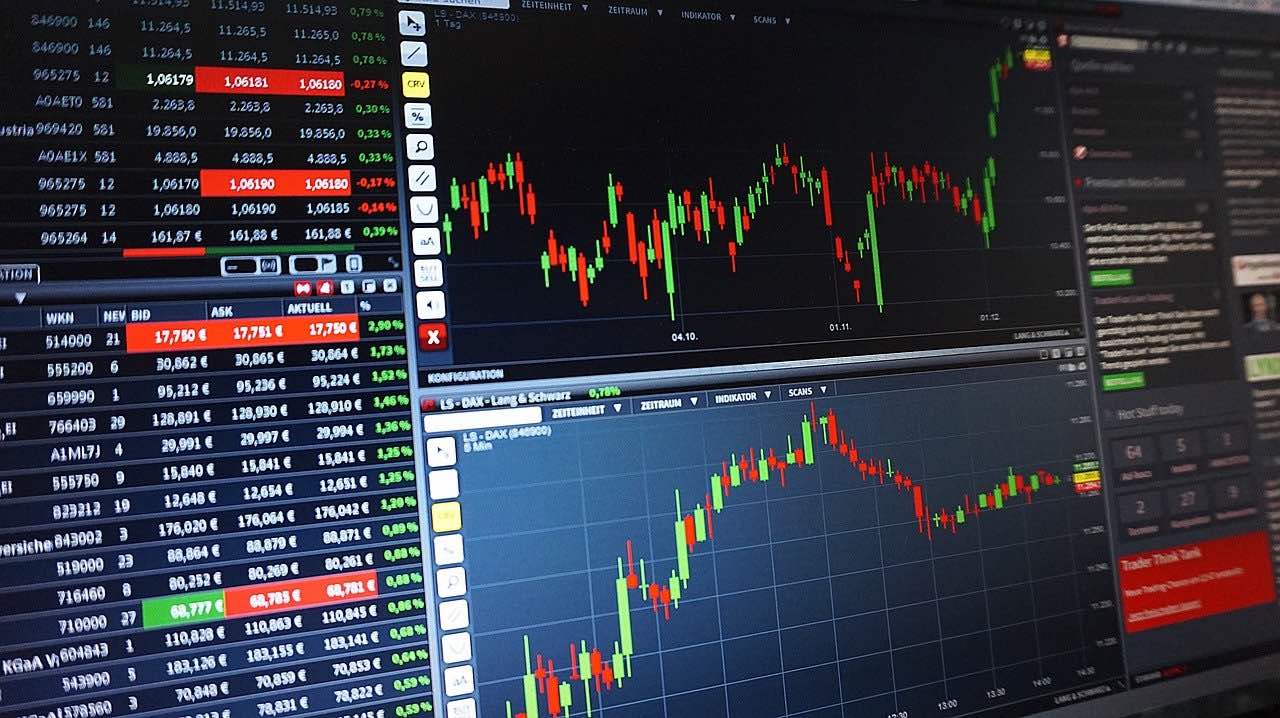
When an asset’s beginning and closing prices are practically equal, a Doji candlestick forms. This makes it look like a little cross or plus sign on a candlestick chart. This pattern implies that the market is at a standstill, neither buyers nor sellers have complete control, hence generating a situation of indecision.
Key characteristics of a Doji include:
- Small or non-existent body
- Long or short upper/lower shadows (wicks)
- Indicates indecision or balance in the market
- Often appears at the peak or bottom of trends
However, not every Doji signals a reversal. The context in which it appears is essential for interpretation.
Types of Doji Candlesticks
Not all Doji candles are created equal. Their appearance and position on the chart give insight into potential market moves.
Here are the four main types:
- Standard Doji: Equal open and close with relatively equal upper and lower shadows. Represents pure indecision.
- Gravestone Doji: Long upper shadow with little or no lower shadow. May indicate a bearish reversal.
- Dragonfly Doji: Long lower shadow with little or no upper shadow. Often signals a bullish reversal.
- Long-Legged Doji: Extended wicks on both sides with a centered body. Suggests heightened volatility and uncertainty.
Each of these types has different implications depending on the trend they appear.
Doji as a Reversal Indicator
A Doji candlestick often appears at key turning points in the market. When found after a strong uptrend or downtrend, it may hint that momentum is fading and a reversal is approaching. However, confirmation from subsequent candles or additional indicators is essential.
For example, in an uptrend, a Gravestone Doji might show buyers losing steam. If the next candle closes bearish, it confirms a potential reversal.
Some signals that strengthen the reversal case include:
- Appearing near support/resistance levels
- Volume spikes during Doji formation
- RSI or MACD showing divergence
- Confirmation candle (strong move in opposite direction)
It’s never wise to rely on a Doji alone, context matters significantly.
Best Practices for Using Doji in Trading
Traders who understand the Doji’s subtleties can use it to craft well-timed entries and exits. Here are a few practical strategies:
1. Combine with Support and Resistance
If a Doji forms near a known support or resistance level, it’s often a strong indication that the trend is weakening.
- Look for a Doji at key horizontal zones
- Wait for a confirming candle to validate the reversal
- Use risk management to protect against false signals
2. Align with Technical Indicators
Use other technical tools like RSI, MACD, or Bollinger Bands to back up the Doji’s message.
For example:
- RSI shows overbought while a Doji appears at the top of an uptrend – potential sell signal
- MACD shows divergence alongside a Dragonfly Doji – potential buy signal
3. Use Volume for Confirmation
High volume during the formation of a Doji may suggest a strong tug-of-war between buyers and sellers, making the signal more trustworthy.
Common Mistakes to Avoid
While Doji candles are powerful, many traders misuse them or misread their context. Avoiding these pitfalls can improve your accuracy.
Frequent mistakes include:
- Acting on a Doji without confirmation
- Ignoring the prevailing trend direction
- Misidentifying non-Doji candles (slightly different open/close)
- Overtrading every Doji as a reversal
Patience and pattern recognition are key. One Doji won’t make or break a trend, but in the right context, it can speak volumes.
Doji Candles in Real Trading Scenarios
Let’s consider an example: Imagine a forex pair in a strong uptrend. As price approaches a known resistance zone, a Gravestone Doji forms with a long upper wick and high volume. The next candle is a solid red bearish candle that closes below the previous support.
In this case, the Gravestone Doji acted as a warning, and the follow-up candle confirmed a reversal. This would be an ideal point for a short trade, especially with a stop-loss just above the wick of the Doji.
When to Avoid Trading on Doji Signals
While Doji candlesticks are useful, they are less effective in sideways or choppy markets. If there’s no clear trend, the appearance of a Doji might simply reflect the lack of directional bias rather than hint at a true reversal.
Situations where Dojis are less reliable:
- During low volume or holiday trading sessions
- Inside consolidation ranges without trend context
- When multiple conflicting signals exist
Knowing when not to act on a Doji is just as important as knowing when to trade it.
Doji as a Compass
Doji candlesticks are powerful visual cues that can signal market hesitation and possible reversals. But like any tool in trading, they are not foolproof. Used in isolation, Dojis can lead to false assumptions. When combined with market context, trend direction, volume, and confirmation, however, they become much more reliable.
If you’re just starting out, study historical charts to see where Dojis appeared before significant reversals. With time, you’ll develop an eye for spotting the ones that matter and the ones that don’t.