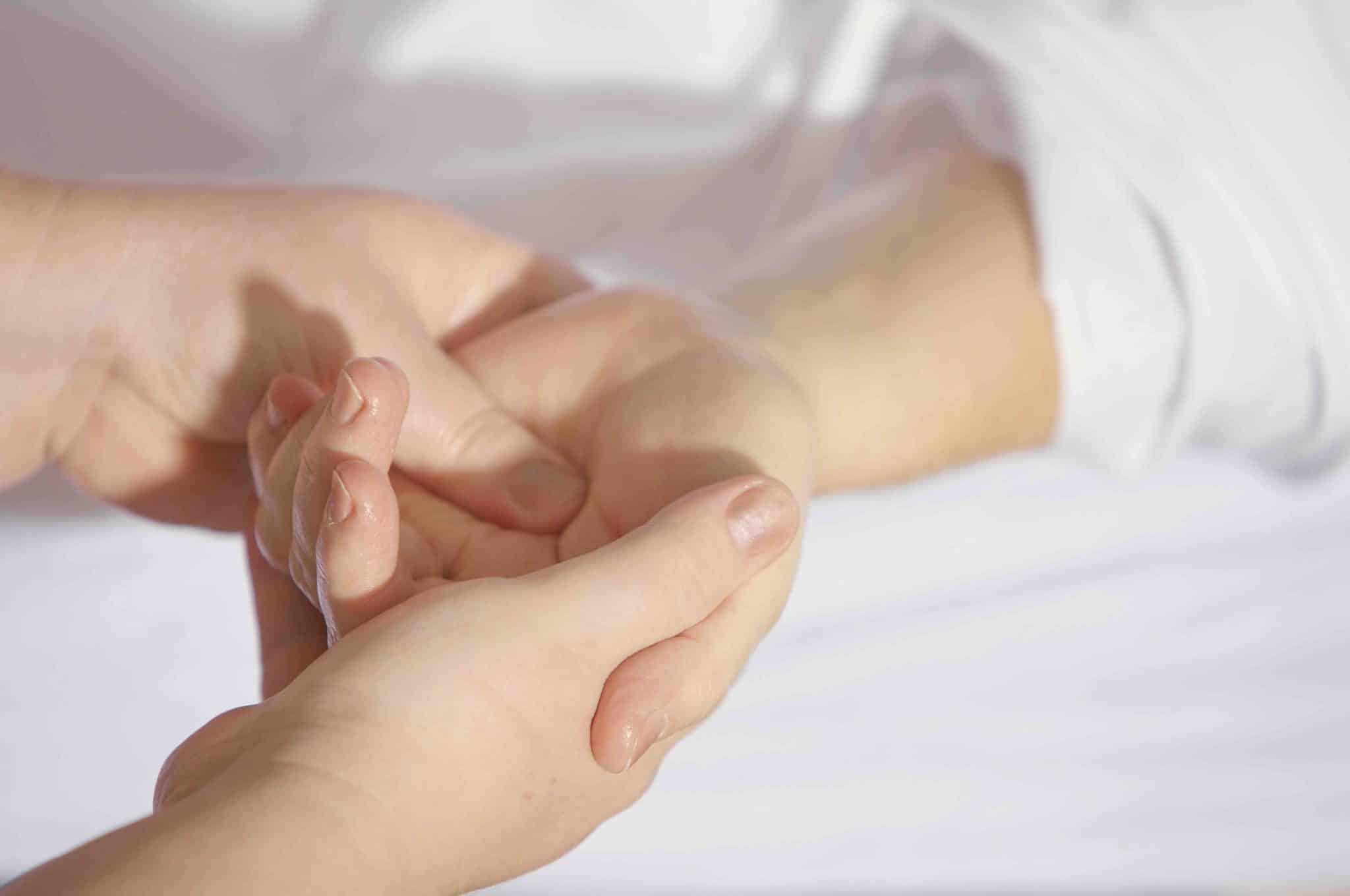
The hands and wrists are involved in gripping, lifting, balance, and impact absorption during sports. Injuries may occur suddenly after a fall or develop gradually from repeated loading. Although some cases improve with rest, persistent pain may indicate a fracture, ligament injury, or tendon problem.
Recovery can also become less predictable with age. Previous injuries, reduced bone density, cartilage wear, and slower tissue healing may increase the risk of stiffness or recurring pain.
Why Hand and Wrist Injuries Are Common in Sports
The wrist contains eight small carpal bones supported by ligaments, tendons, nerves, and surrounding soft tissue. The hand contains another 19 bones across the palm and fingers. This structure allows precise movement but also creates several areas that may be injured.
Falls are common causes of wrist injuries in cycling, football, and court sports. Repetitive gripping may affect athletes involved in golf, tennis, badminton, climbing, and strength training. When pain persists or affects movement, a hand and wrist doctor Singapore patients can consult may help identify the injured structure and recommend appropriate treatment.
Common Hand and Wrist Sports Injuries
Wrist Sprains
A wrist sprain occurs when a ligament is stretched or torn. It may happen after a fall, sudden twisting motion, or forceful loading of the wrist. Symptoms often include pain, swelling, bruising, and reduced grip strength.
A mild sprain may improve with rest and rehabilitation. However, ongoing pain should be assessed because fractures and ligament injuries can initially feel similar to a sprain.
Scaphoid Fractures
The scaphoid is a small wrist bone near the base of the thumb. It is commonly injured after a fall onto an outstretched hand. Pain or tenderness in the small hollow near the thumb side of the wrist may be an important clinical sign.
Some scaphoid fractures are not visible on the first X-ray. A clinician may recommend temporary immobilisation, repeat imaging after 2 to 3 weeks, or an MRI. Early diagnosis matters because part of the scaphoid has a relatively limited blood supply.
Hook of Hamate Fractures
The hook of hamate is located on the palm side of the wrist. It may be injured when repeated force travels through the handle of a golf club, racquet, or bat.
Athletes may notice palm-side pain and reduced grip strength. These fractures are not always clear on standard X-rays, so CT or MRI may be considered when symptoms persist.
Finger Fractures, Dislocations, and Tendon Injuries
Finger injuries are common in ball sports and contact sports. A direct impact may cause a fracture, joint dislocation, or tendon injury. A finger that looks deformed or cannot bend or straighten properly should be assessed promptly.
One example is mallet finger, which occurs when the fingertip is forcefully bent. Another is jersey finger, which affects a tendon used to bend the finger.
De Quervain Tenosynovitis and TFCC Injuries
De Quervain tenosynovitis causes pain near the base of the thumb and is often linked to repetitive gripping or lifting. A triangular fibrocartilage complex, or TFCC, injury may cause pain on the little-finger side of the wrist, clicking, or discomfort during rotation.
Treatment depends on the injured structure. Options may include activity modification, splinting, rehabilitation, injections, or surgery in selected cases.
Screening, Prevention, and Early Detection
There is no single screening test for every hand or wrist injury. Assessment usually considers how the injury occurred, the exact location of pain, joint stability, grip strength, range of motion, circulation, and sensation. X-rays may identify fractures, while MRI, CT, or ultrasound may provide additional detail.
Risk may be reduced by using protective equipment, improving technique, selecting appropriately sized equipment, and increasing training load gradually. Pain that continues for several days after a fall or direct impact should not automatically be treated as a minor sprain.
Daily Care and Lifestyle Impact
Hands and wrists are difficult to rest completely because they are used for work, driving, household tasks, and mobile phone use. Temporary activity changes may help reduce unnecessary loading. This may include avoiding heavy gripping, push-ups, or repetitive wrist movement.
Cold therapy may help reduce pain and swelling during the first 24 to 48 hours after an acute injury. A brace may also be useful in selected cases, although prolonged immobilisation without guidance can contribute to stiffness and weakness.
Age-Related and Chronic Conditions
Not every painful wrist is caused by a recent sports injury. Previous fractures and ligament tears may contribute to post-traumatic arthritis. Thumb osteoarthritis can also cause pain during gripping or pinching, particularly as people age.
Inflammatory conditions may sometimes affect the hands and wrists. Psoriatic arthritis, for example, may cause joint pain, finger swelling, and nail changes such as pitting. Redness, warmth, fever, or increasing swelling should be assessed because infection may require urgent treatment.
Over-the-Counter and Prescription Treatments
Over-the-counter options may include paracetamol or topical non-steroidal anti-inflammatory drugs, commonly called NSAIDs. In studies of acute musculoskeletal injuries, approximately 52% of people using topical diclofenac achieved at least a 50% reduction in pain, compared with 25% using a topical placebo.
Prescription treatments may include oral anti-inflammatory medication or corticosteroid injections for selected conditions. For de Quervain tenosynovitis, studies have reported improvement rates of approximately 67% to 93% after corticosteroid injection. Medication may relieve symptoms, but it does not correct a displaced fracture, unstable joint, or tendon rupture.
In-Clinic Procedures
An orthopaedic assessment may include clinical examination and imaging. Depending on the diagnosis, treatment may involve splinting, casting, rehabilitation planning, ultrasound-guided injection, or aspiration of a symptomatic ganglion cyst.
Surgery may be considered for certain displaced fractures, tendon ruptures, or unstable ligament injuries. Lasers and cosmetic injectables are not standard treatments for acute sports injuries affecting the hand and wrist.
What Our Orthopedic Clinic Says
In our clinic, we often remind patients that the severity of a hand or wrist injury cannot always be judged by swelling alone. Some fractures and tendon injuries initially appear mild.
We usually advise patients to monitor persistent tenderness, reduced grip strength, loss of movement, and pain that returns during activity. The goal is to identify the injured structure before it leads to long-term stiffness or reduced function.
Putting This Into Practice
- Stop the activity if pain affects grip or movement.
- Remove rings promptly if swelling develops.
- Apply cold therapy for short periods when appropriate.
- Avoid repeatedly testing a painful wrist with heavy loading.
- Arrange an assessment if pain remains localised or persistent.
- Return to training gradually after strength and mobility improve.
When to Seek Professional Help
Seek medical attention if there is:
- Visible deformity
- Severe pain after a fall or direct impact
- Tenderness near the base of the thumb
- Inability to bend or straighten a finger
- Numbness, weakness, or tingling
- Increasing redness, warmth, swelling, or fever
- Pain that repeatedly returns during sport
Commonly Asked Questions
Can I continue playing if the pain is mild?
Temporary activity modification may be reasonable for a mild ache. However, localised pain after a fall or direct impact should be assessed if it persists.
Why can a wrist fracture be missed on an X-ray?
Small fractures, particularly scaphoid fractures, may not be visible immediately. Repeat X-rays, MRI, or CT may be needed.
How long does a wrist sprain take to heal?
A mild wrist sprain may improve over several weeks. More significant injuries may take longer and require structured rehabilitation.
Is a wrist brace always helpful?
A brace may protect an injured structure, but it is not appropriate for every condition. The type of brace and duration of use should match the diagnosis.
When should I consult a hand and wrist doctor Singapore patients can access?
Assessment may be helpful when pain persists, grip strength is reduced, movement is restricted, or a fracture, tendon injury, or ligament injury is possible.
Next Steps
Most hand and wrist injuries can be managed more effectively when the affected structure is identified early. Ongoing pain, swelling, weakness, or reduced movement should not be ignored.
A consultation with a hand and wrist doctor Singapore patients can access through an orthopedic clinic may help determine whether imaging, immobilisation, rehabilitation, or another treatment approach is appropriate.