

Not so long ago, sitting through a movie without checking your phone felt normal. Reading a long article required patience but not extraordinary discipline. Conversations unfolded without the silent pull of a glowing screen in your pocket.
Today, many people notice something has shifted. You start reading and feel the urge to check a notification. You open a browser tab and forget why you opened it. A meeting runs long, and your mind jumps to email, texts, and social feeds.
This experience is becoming common enough that psychologists now describe it as an attention economy problem. The modern digital environment is designed to capture and hold attention through constant alerts, rapid content changes, and endless novelty. The result is subtle but powerful. Our brains are adapting to a faster rhythm of information, and sustained focus begins to feel uncomfortable.
The encouraging news is that attention is not something we permanently lose. It is a skill. And like any skill, it can be rebuilt. Organizations such as Phreedom Foundation are working to help individuals and families recognize how digital environments influence focus and to develop healthier habits around technology use. Understanding what is happening to our attention is the first step.

The Quiet Signs Your Focus Is Slipping
One challenge with attention is that there is no simple clinical test for it in everyday life. Instead, focus tends to reveal itself through patterns.
Dr. Nidhi Gupta, founder of Phreedom Foundation, often encourages people to focus on practical markers rather than abstract measurements. Ask yourself simple questions. How long can you read before reaching for your phone? Can you sit through a meeting without multitasking? Can you complete a task without opening a new tab or switching apps? If that window of concentration has shrunk, your attention span may be slipping.
The warning signs are usually small at first. You might notice difficulty focusing for more than a few minutes before your mind wanders. Conversations require extra effort to stay present. Movies with slower pacing feel frustrating. Rapid, highly edited content begins to feel more engaging than long-form storytelling. Many people also recognize a familiar reflex. The phone appears in your hand at every stoplight or quiet moment.
Research suggests that these behaviors are connected to how digital environments train the brain. Notifications and alerts interrupt attention and make it harder to return to the original task. Media multitasking, such as checking social media while working or texting while watching television, has also been linked to weaker sustained attention. The good news is that distraction is not a personal failing. It is a learned pattern.

Why Constant Stimulation Makes Focus Feel Uncomfortable
The human brain evolved in environments that rewarded curiosity and novelty. In a digital world, novelty is unlimited. Every swipe reveals new information. Every notification signals something potentially important. Every video promises a quick burst of entertainment.
Over time, the brain adapts to this rhythm. Instead of expecting long periods of quiet concentration, it becomes conditioned to frequent stimulation. When stimulation slows down, we get bored.
Dr. Gupta describes this moment as one of the earliest warning signs of shrinking attention. Sustained focus begins to feel uncomfortable because the brain has been trained to expect constant input. Research on digital media use suggests that heavy exposure to screens and rapid information streams can influence cognitive processes, including memory, attention, and learning behaviors.
Another challenge is multitasking. Many people believe they are good at handling several streams of information at once. In reality, cognitive scientists say the brain switches rapidly between tasks rather than truly processing them simultaneously. Each switch carries a small cognitive cost, making deep thinking more difficult.
The result is a mental fragmentation. That means tasks take longer and mental fatigue builds more quickly.
The Hidden Cost of Digital Noise
The phrase “digital noise” describes the constant background of alerts, messages, and content competing for attention.
Most people do not consciously notice how often they check their phones. Yet studies suggest that frequent checking behaviors can become habitual, sometimes occurring dozens of times a day without conscious awareness.
Each interruption may only last a few seconds. But collectively, they reshape the brain’s approach to attention. Focus shifts from deep engagement to rapid scanning. Instead of sustained concentration, the brain becomes efficient at detecting novelty and switching quickly between tasks.
Short-form content accelerates this process. Fast-moving videos and rapid edits reward quick reactions rather than patience. Over time, the brain becomes optimized for speed rather than depth.
The Good News: Attention Can Be Rebuilt
While digital environments influence attention, they do not permanently damage it. The brain remains remarkably adaptable throughout life.
Dr. Gupta emphasizes that the first step toward rebuilding focus is simple awareness. Recognizing that attention is fading allows individuals to make intentional changes.
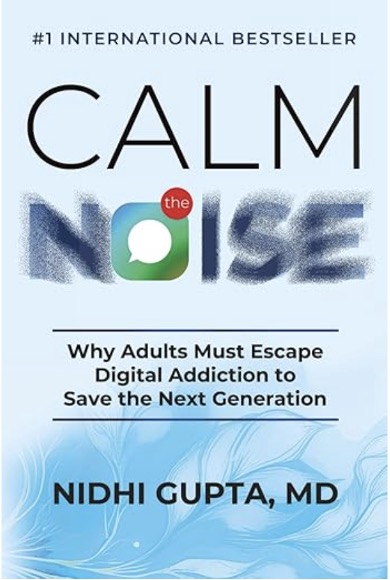
In her bestselling book Calm the Noise, Dr. Gupta outlines a practical approach to reducing digital distractions and rebuilding focus. The strategy centers on a few simple habits: turning off nonessential notifications, creating daily blocks of time away from devices, removing apps that consume attention without adding value, and allowing moments of boredom rather than filling every pause with screens. These small, intentional changes help quiet digital noise and give the brain space to regain clarity, creativity, and sustained focus.
Perhaps the most surprising recommendation is learning to tolerate boredom, but this might be the most important skill of all. When the brain is no longer flooded with constant stimulation, creativity begins to return. Ideas emerge more easily, and concentration gradually lengthens.
Reclaiming Focus in a Distracted World
The digital world is not going away. Notifications, social feeds, and constant information streams will remain part of modern life. But attention is still ours to shape. The key is shifting from passive consumption to intentional engagement with technology. Tools that once controlled attention can become tools we manage.
Digital wellness is not about rejecting technology entirely. It is about designing environments that support focus rather than fracture it. Attention is one of the most valuable resources we have. It shapes how we think, how we connect with others, and how deeply we experience the world.
