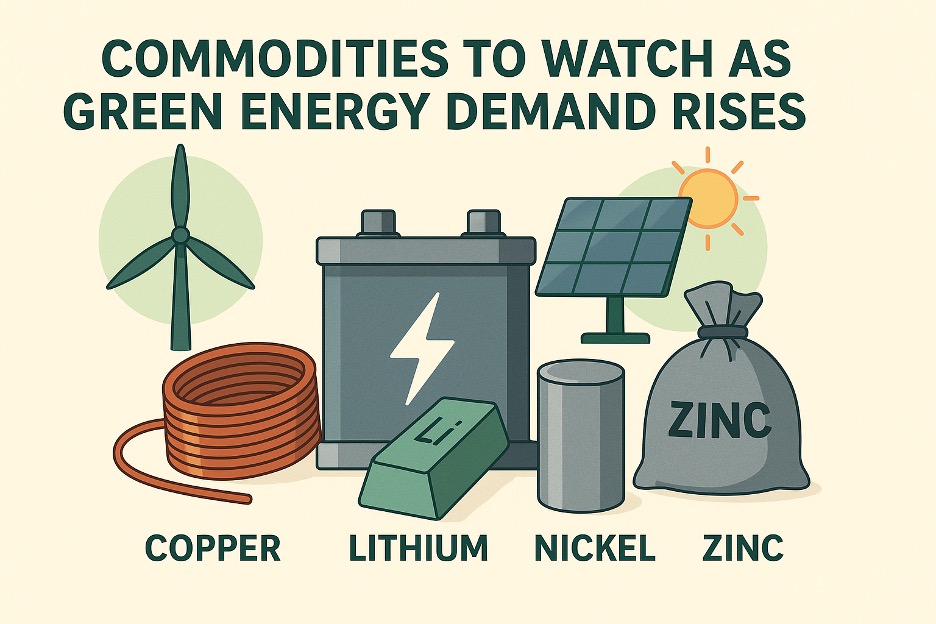
As the world accelerates toward a sustainable future, green energy is reshaping commodity markets, drawing the attention of retail traders seeking growth and diversification. The surge in demand for renewables like solar, wind, and electric vehicles has spotlighted industrial metals and materials critical to these technologies.
In 2025, with global policies pushing net zero goals and infrastructure spending climbing, commodities such as copper, lithium, nickel, and zinc are emerging as prime investment opportunities. The live zinc price, for instance, reflects robust demand for galvanizing steel in renewable projects. This article examines why these commodities are gaining traction, supported by market data and research, offering traders actionable insights to navigate this transformative trend.
The Green Energy Revolution and Commodity Demand
The shift to green energy is driven by ambitious climate targets, with governments and industries investing heavily in clean technologies. The International Energy Agency forecasts that renewables will account for 35 percent of global electricity by 2030, up from 20 percent in 2020, boosting demand for specific commodities. Unlike volatile stocks or cryptocurrencies, these materials are tied to tangible industrial needs, offering stability and exposure to long-term growth. Retail traders are drawn to this sector for its resilience against inflation and market swings, providing a hedge as global economies face trade tensions and monetary policy shifts.
Research from Wood Mackenzie underscores a cyclical peak in metals demand in 2025, fueled by infrastructure and electrification projects. This trend is amplified by policies like the U.S. Inflation Reduction Act and China’s renewable energy push, creating a fertile ground for commodity investments. Traders can capitalize on these structural shifts without the speculative frenzy of other assets.
Top Commodities to Watch
Several commodities stand out for their pivotal roles in green energy. Here’s a closer look:
- Copper: Essential for EV wiring, solar panels, and wind turbine grids. Prices have stabilized at around 4.39 dollars per pound in mid-2025, driven by supply constraints and Chinese stimulus. Demand is projected to rise 20 percent by 2030.
- Lithium: The cornerstone of EV batteries, lithium prices have rebounded after 2024 oversupply corrections, with futures gaining 4 percent in August 2025, according to social media.
- Nickel: Vital for high-density EV batteries and stainless steel, nickel prices are at 15.12 dollars per pound, supported by supply bottlenecks in key regions.
- Zinc: Used to galvanize steel for wind turbines and infrastructure, the live zinc price stands at 2,788.70 dollars per metric ton, up 8.03 percent year over year. Its role in renewables makes it a sleeper hit for traders.
These commodities to watch offer direct exposure to green energy growth, accessible through ETFs, futures, or CFDs on platforms like eToro or Interactive Brokers.
Why Retail Traders Are Jumping In
Retail traders are increasingly drawn to industrial metals for three main reasons. First, they hedge inflation, which persists at 3 to 4 percent globally in 2025, eroding cash value. Second, their low correlation with equities, as shown in studies on commodity dependencies, reduces portfolio volatility. Third, modern platforms have lowered barriers, with retail participation in metals trading up 15 percent since 2023. Social media discussions highlight China’s 1.2 trillion yuan hydroelectric projects, boosting zinc and steel demand, and fueling retail interest.
Unlike stocks tied to corporate earnings, these commodities respond to real-world supply and demand, making them appealing for traders seeking fundamentals over sentiment. The accessibility of leveraged products and educational resources further empowers retail investors to engage confidently.
Market Trends and Insights
Market data reflects strong momentum. The live zinc price, for instance, has risen 3.81 percent monthly, driven by galvanization needs for renewable infrastructure. Copper futures on the LME reached 9,676 dollars per metric ton, supported by EV and grid investments. Lithium futures show renewed strength, while nickel benefits from supply tightness. A Management Science study notes that industrial metal returns often signal broader economic trends, offering predictive value for traders. However, volatility from trade disputes, as seen in Q2 2025 copper dips, requires careful timing.
Key Commodities Performance in 2025
The table below outlines top commodities, their 2025 performance, and green energy drivers, based on mid-2025 data.
| Commodity | Current Price (USD) | YTD Change (%) | Green Energy Application | Key Demand Driver |
| Copper | 4.39 per lb | +10.9 | EV wiring, solar/wind grids | Electrification, stimulus |
| Lithium | ~75,000 per ton | +12.5 | EV batteries | Battery demand, supply recovery |
| Nickel | 15.12 per lb | +9.8 | High-density EV batteries | Supply constraints, EV growth |
| Zinc | 2,788.70 per ton | +8.0 | Galvanizing for turbines | Infrastructure, renewables |
Data from Trading Economics, Daily Metal Price, and market reports. This table helps traders identify high-potential assets for green energy exposure.
Challenges and Practical Tips
Trading these commodities isn’t without risks. Supply gluts, like lithium’s 2024 correction, can depress prices, while geopolitical tensions disrupt mining operations. Leveraged derivatives amplify losses, and physical holdings involve storage costs. Retail traders must also navigate volatility from global policy shifts, such as U.S. tariffs affecting copper prices.
Practical tips:
Start with diversified ETFs like CPER for copper or LIT for lithium to spread risk.
Track economic calendars for policy announcements affecting metals.
Enter during dips caused by temporary oversupply, but hold for long-term scarcity.
Use platforms like TradingView for real-time zinc price alerts and sentiment analysis.
Backtest strategies on demo accounts to manage volatility risks.
Conclusion
The rise in green energy demand has propelled industrial metals like copper, lithium, nickel, and zinc into the spotlight, offering traders a compelling blend of stability and growth. Their tie to real-world applications, from EV batteries to wind turbines, makes them resilient in turbulent markets.
The live zinc price, up 8 percent in 2025, signals robust demand for renewable infrastructure, mirroring broader trends. From navigating market cycles, I’ve seen commodities in portfolios when speculative assets falter, but success demands vigilance. My view: allocate 10 to 15 percent to these metals via ETFs or futures, balancing risk with opportunity. As green energy reshapes the global economy, these commodities to watch could be a cornerstone for traders aiming to ride the wave of sustainability.